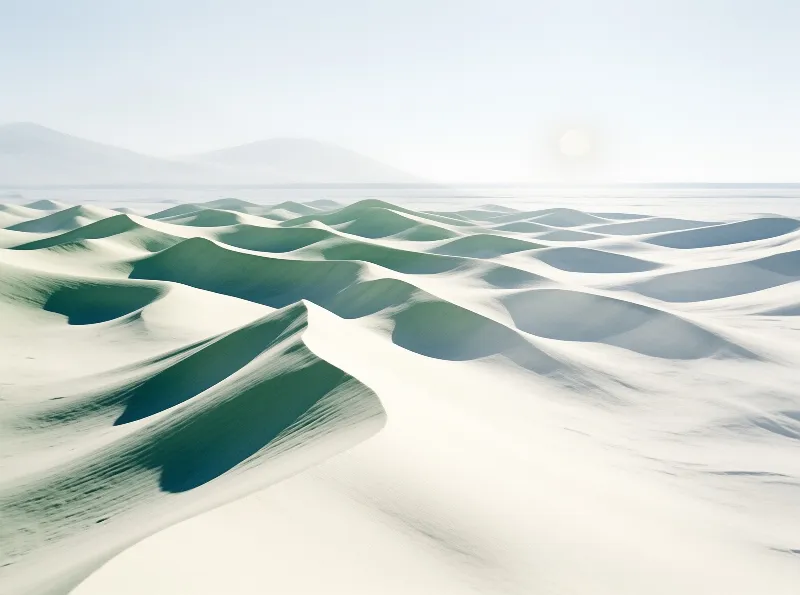
Sand Dunes Stretching Under Hazy Sunlight
Faint mountain silhouettes drift along the distant horizon beneath a pale, washed-out sky. The light turns the terrain surreal—white peaks catching the last clean glow, deep teal-blue hollows holding the cold—every ridge a slow fold between warmth and shadow.
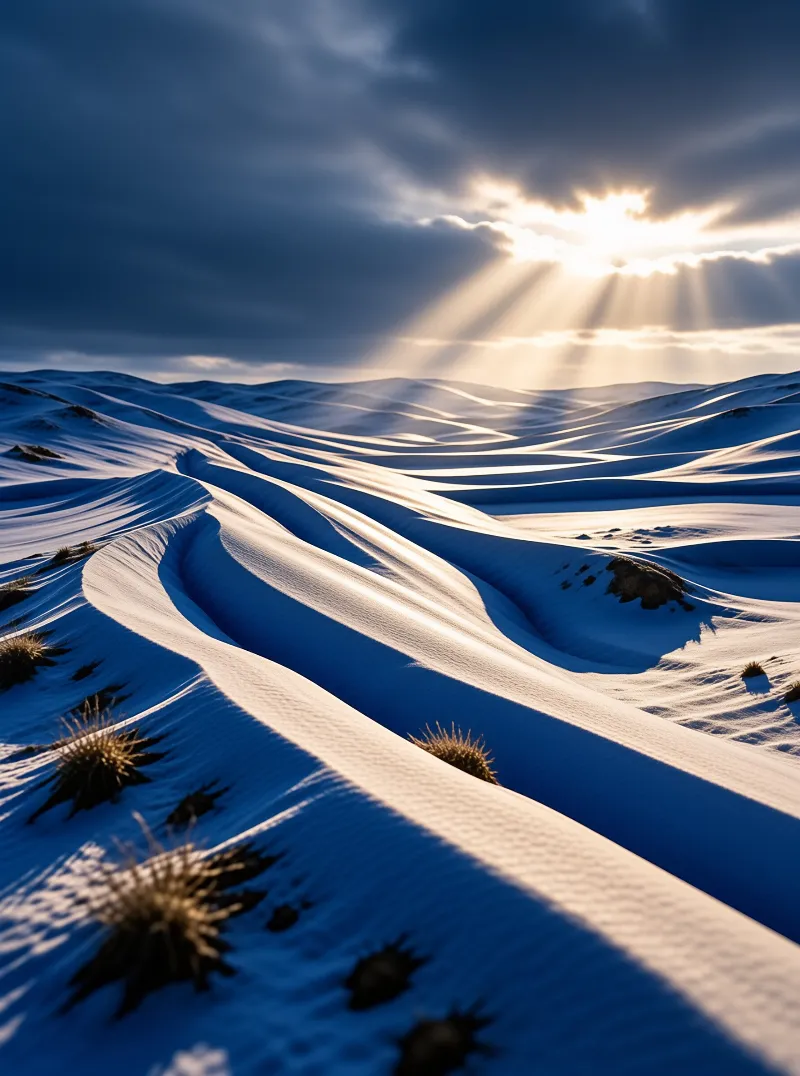
Sand Dunes Glowing Under Dramatic Sunlight
The frame catches the sand where wind has turned it sculptural—slow, patient curves that feel carved rather than drifted. Sunlit crests bleach almost white; the hollows between them drop into deep, cool shadow. That contrast is the whole point: it makes you read the surface grain by grain.
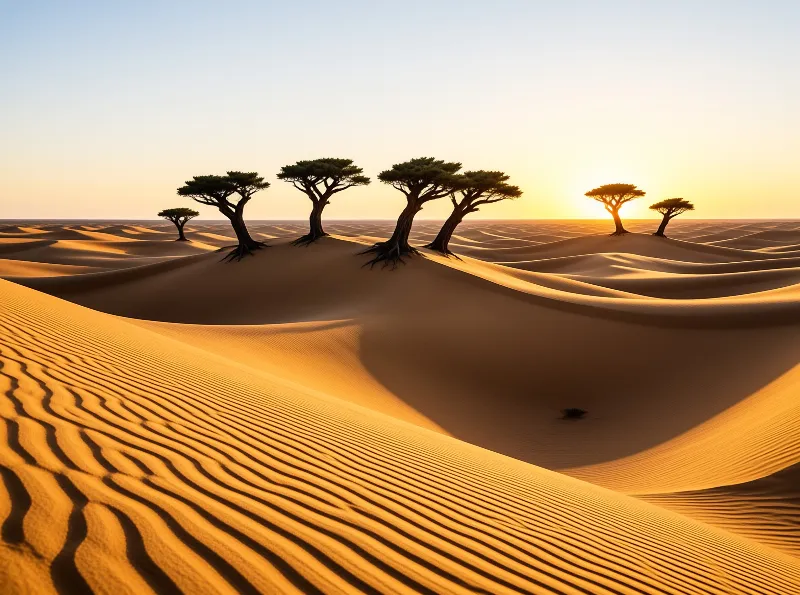
Acacia Trees On Desert Dunes During Sunset
Up close, the sand becomes a study in patience—fine ripple patterns running like fingerprints across the foreground, each one placed by wind and held in place by the low sun. Long shadows pool between the ridges, turning a few square feet of dune into something that feels ancient and completely still.
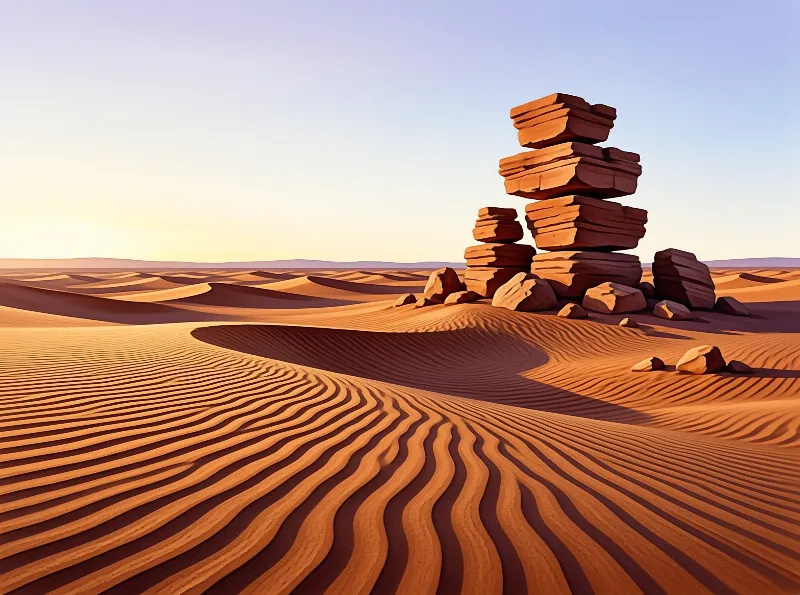
Sandstone Rocks Stacked In Golden Desert Dunes
Wind has combed the orange sand into tight, parallel ripples that pull the eye straight toward a stone structure at the frame's edge. The light sits low—warm but not yet gold, the kind of soft slant that only happens in the first hour after sunrise or the last before dark. It flattens nothing; instead it lets the ripples read as lines and the stone read as weight.
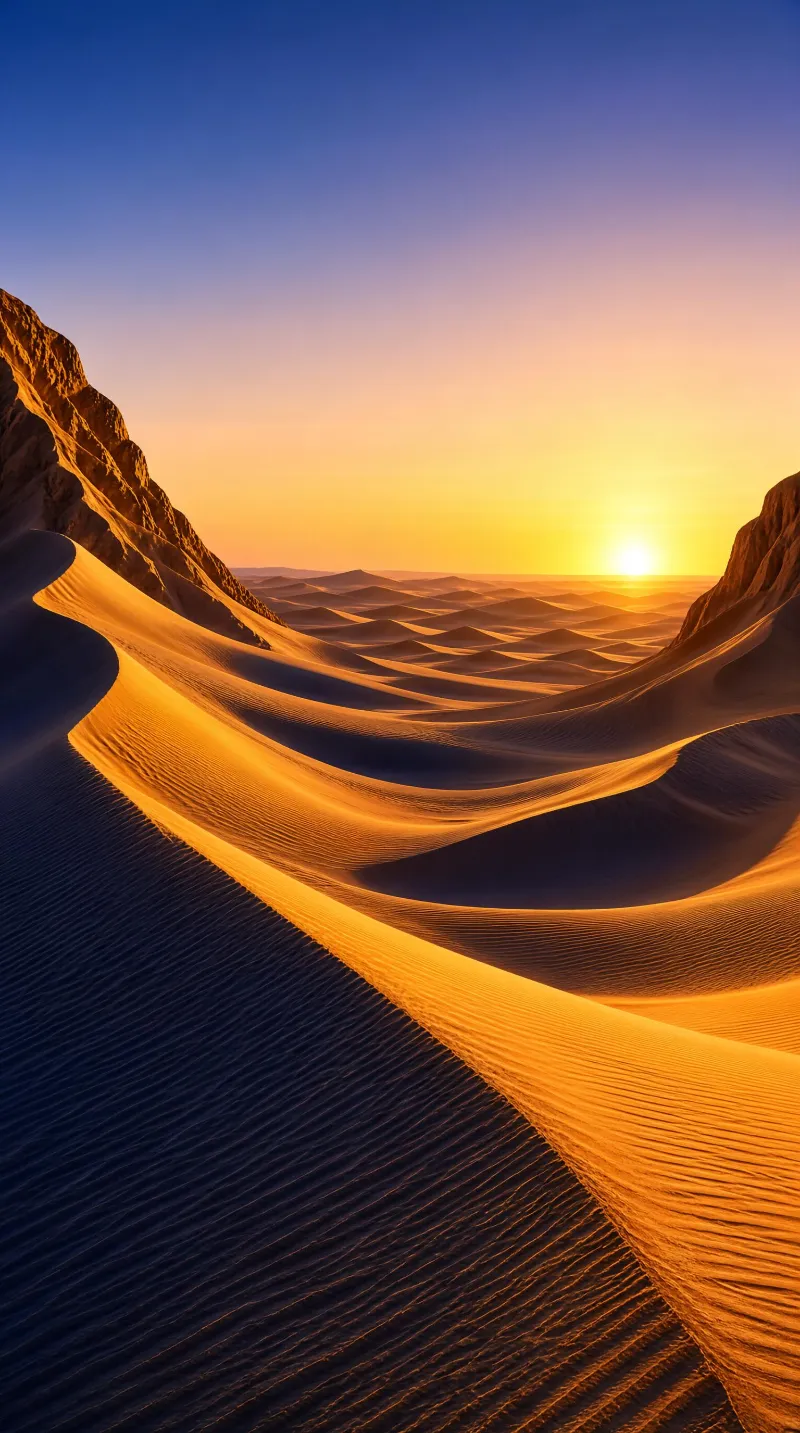
Sand Dunes Sunset Golden Ridges Shadows
The dunes run to the horizon under a sky that's already losing interest—the real show is on the ground. Low sun hits the ridges gold, edge-on, while everything below the crest drops straight into blue shadow so deep it reads almost purple. The sun itself sits just above the horizon line, bright enough to flatten the distance into a single warm wash. No clouds, no distraction: just sand, light, and the cleanest possible geometry.
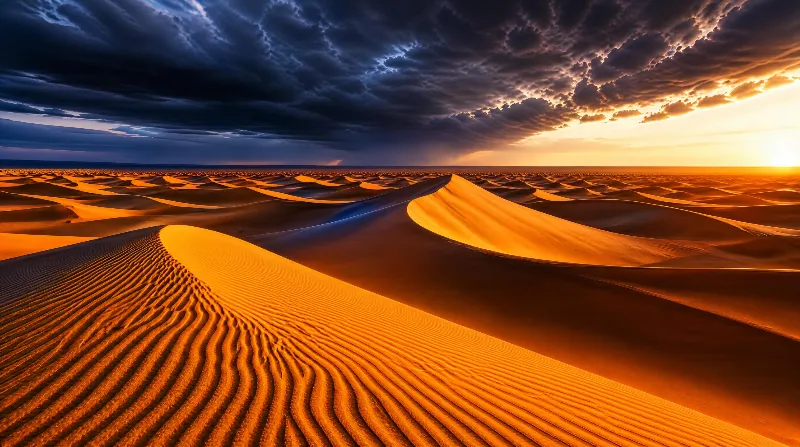
Sand Dunes Desert Sunset Rippled Texture
The dunes glow gold under a setting sun that refuses to quit, while overhead, dark storm clouds push in from one side of the frame like a second thought. Warm sand, cold sky—the horizon catches fire where the two meet, a band of orange so dense it feels like the ground is burning upward. Everything in the photograph is holding its breath. You can feel the air change.
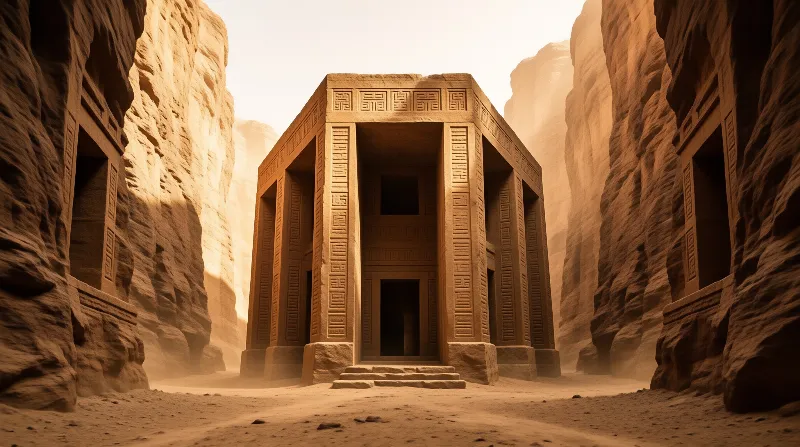
Temple Ruin In Desert Canyon Golden Light
The canyon walls close in and the world gets quiet. What's left of the structure stands at the end of a narrow stone corridor—columns still upright, deep recesses pulling shadow like they were built to hold it. Late sun hits the facade head-on, warming the stone to a color between honey and bone, while the sandy floor takes the long shadows and stretches them thin. You feel the height of the place before you see it. The cliffs make sure of that.
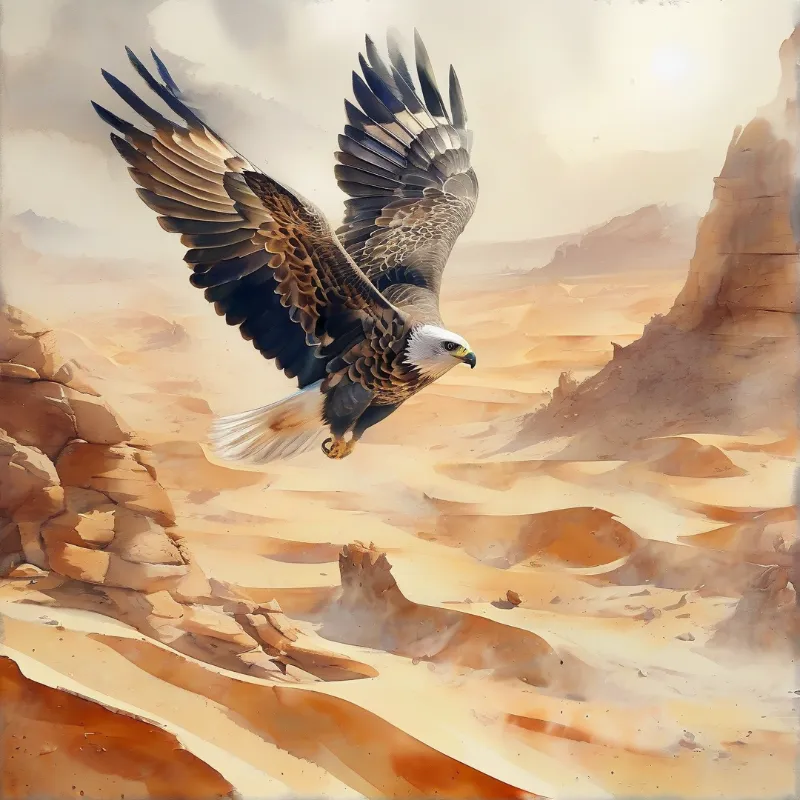
Eagle Gliding Over Desert Under Hazy Sun
An eagle rides the hazy air above a desert that the painter has barely bothered to define—just orange and beige bleeding into each other, warm washes that feel more like memory than place. The bird itself is the only sharp thing in the frame: a yellow beak catching what light there is, white tail feathers fanned against the heat-haze. Everything else dissolves. That's the point. Watercolor was the right choice here—you can't paint this kind of distance with a hard edge.
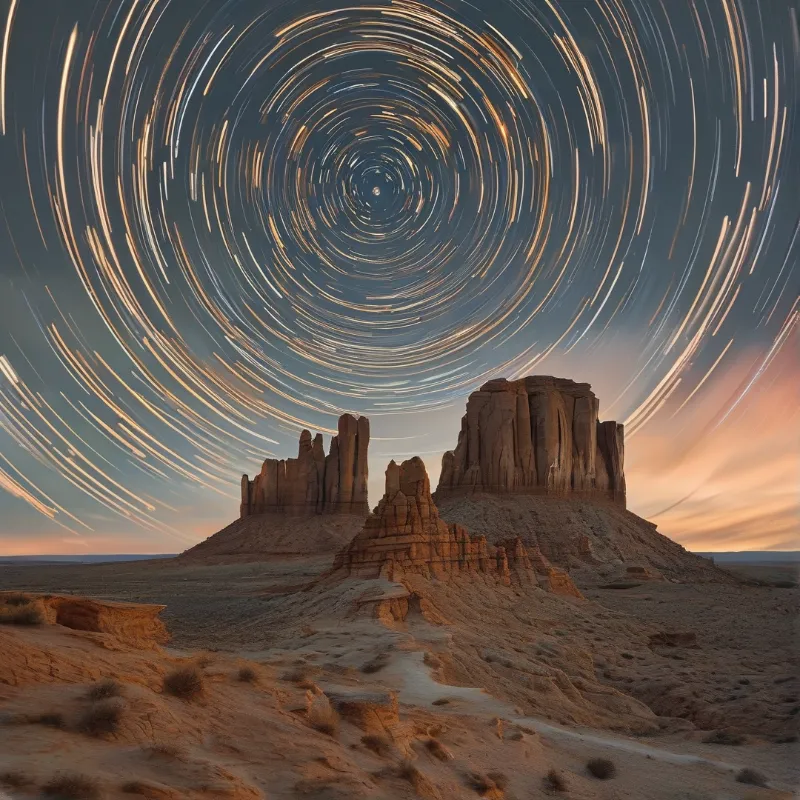
Star Trails Above Red Desert Buttes
The night sky does what it always does—rotate, slowly, around a point you can't see but the camera can. Star trails arc across the frame in concentric rings, pale and patient, while below them the red buttes stand still. These spires were carved by wind over centuries; the sky above them was drawn in a single long exposure. Two different kinds of time, caught in the same rectangle. At the horizon, a band of warm orange holds against the cold blue of the upper atmosphere—the last trace of day refusing to let go, even here, even this late.
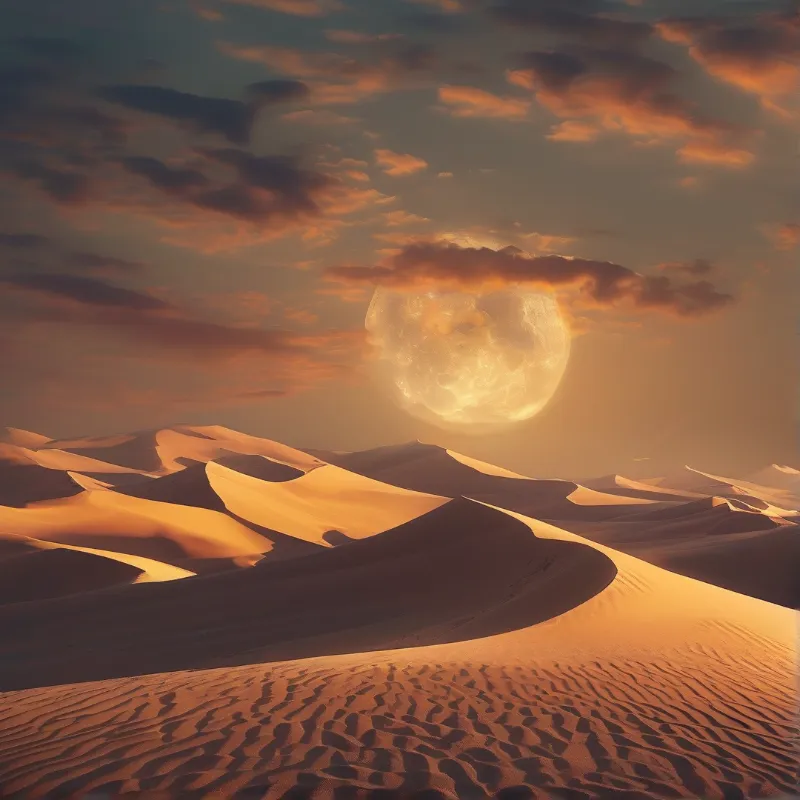
Desert Dunes Under a Giant Glowing Moon
The dunes are still holding the day's gold when the moon shows up—low, large, and luminous, pushing through a thin veil of cloud. Warm sand, cool moonlight: the two temperatures fight it out across the ridges. The moon doesn't flood the scene; it picks at it, touching the crests in silver while the hollows stay dark. You can feel the air cooling.
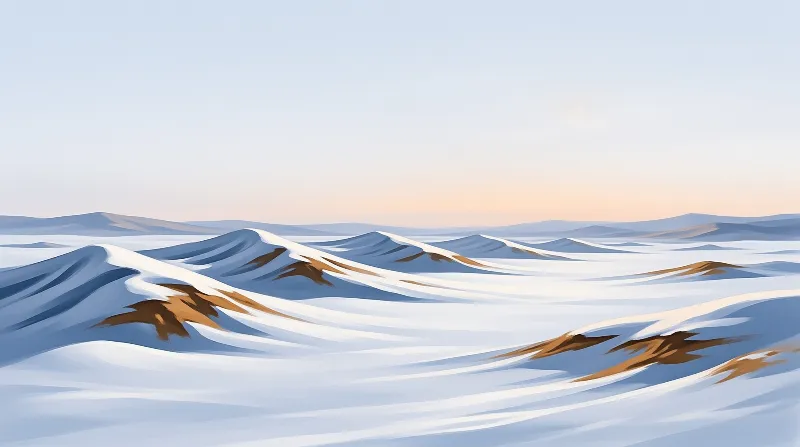
Snow-Covered Desert Dunes At Dawn
The dunes have gone white overnight—snow laid across the curves like a second skin, turning every ridge into a line between white and the dark earth underneath. At dawn, the light is soft enough to make the horizon disappear; the sky and the snowed-in sand meet in a single exhale of pale gray. It won't last. That's what makes it.
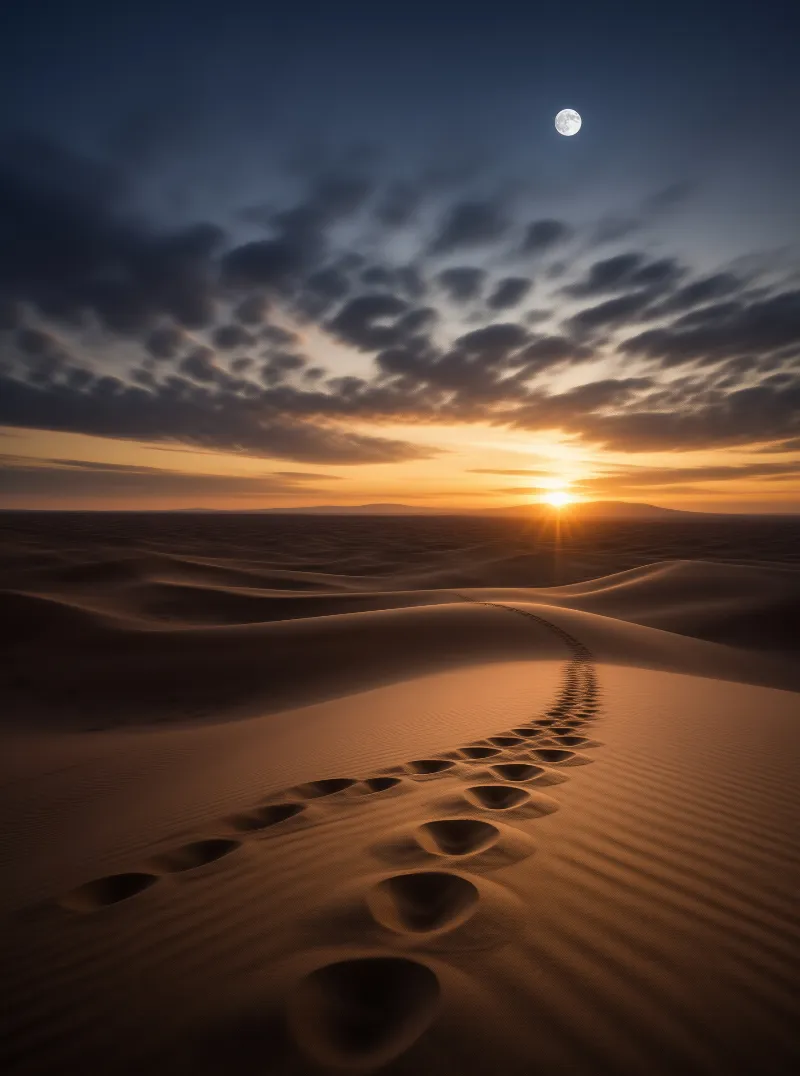
Footprints Across Sand Dunes At Sunset
A single trail of footprints cuts across the dune and disappears toward the horizon, where the sun is doing what it does best—going down in orange. Above it, a bright moon already waits in a clouded sky, white and impatient. Two lights in the same frame: one leaving, one arriving. The footprints are the only human mark in the whole photograph, and they don't explain themselves. Someone walked here. That's all you get. The wind will take the rest by morning.
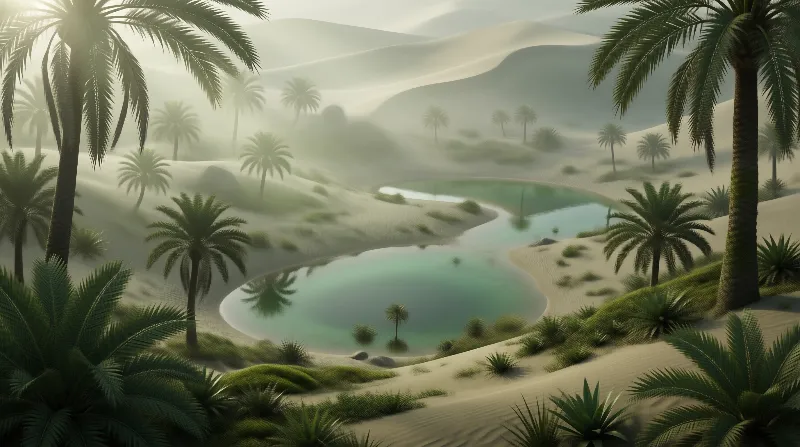
Palm Oasis Dunes Morning Mist Turquoise
A stream curls through low dunes like it has every right to be there, despite everything the surrounding desert says. Tall palms lean over the water, their shadows cool and definite on the sand. Green—actual green—fills the frame wherever the water touches, and a thin mist hangs just above the surface, softening the edges of everything. It reads like a mistake. It reads like a gift. Either way, it's the only place in the entire collection where you can almost hear something.
13 images · hand-curated
All collections →